

Embryonic Stem Cells
- Mar 1, 2025
- 2 min read
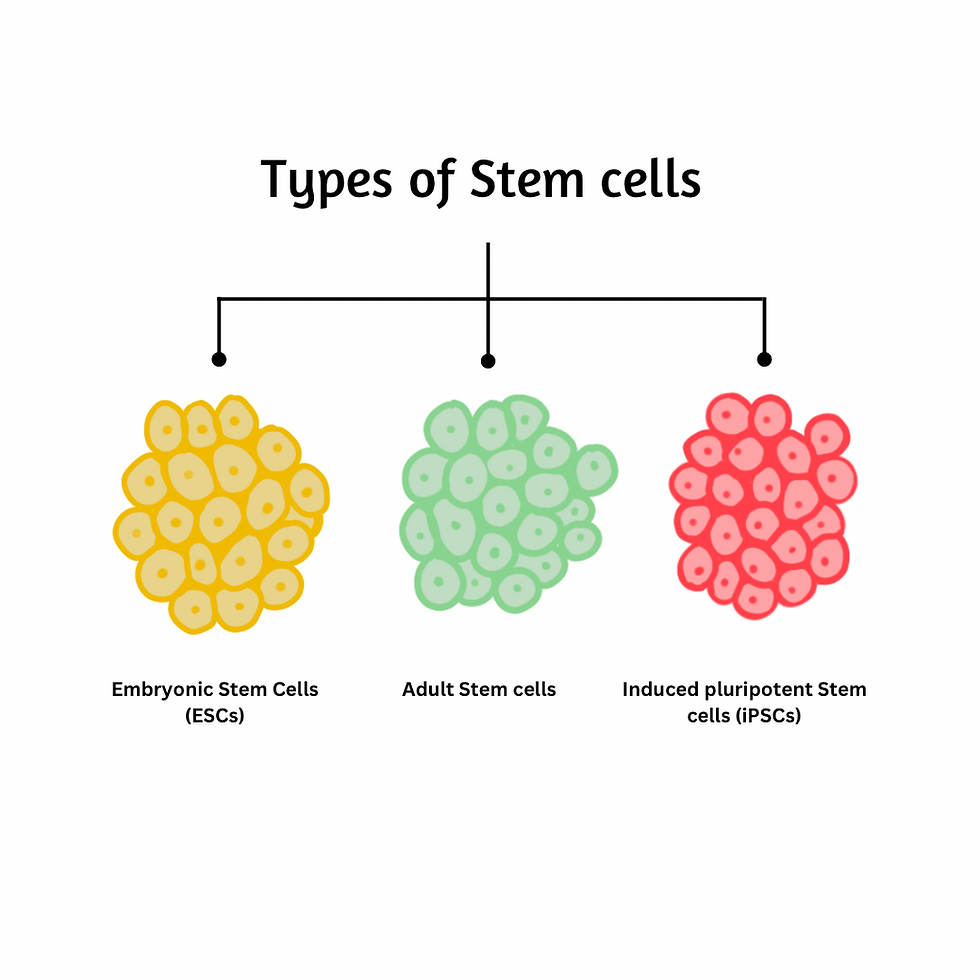
Embryonic stem cells (ESCs) are a unique and powerful type of cells derived from the early stages of an embryo. They are pluripotent, meaning they have the extraordinary ability to develop into any cell type in the human body. This characteristic makes them a fundamental tool for understanding human development and a promising avenue for regenerative medicine.
Origin of Embryonic Stem Cells
ESCs originate from the inner cell mass of a blastocyst, a structure formed around five days after fertilization. At this stage, the blastocyst consists of an outer layer of cells that will become the placenta and an inner group of cells that will develop into the embryo itself. It is from this inner cell mass that ESCs are harvested and cultured in laboratories for research purposes.
ESCs can differentiate into any of the three germ layers: ectoderm, mesoderm, and endoderm. These germ layers give rise to all tissues and organs in the body — the ectoderm forms the nervous system and skin, endoderm produces lung cells, thyroid cells, liver cells and pancreatic cells and the mesoderm produces cardiac muscles cells, skeletal muscle cells, red blood cells and tubule cells of kidney.

Unique Characteristics of ESCs
Pluripotency
What sets ESCs apart from other stem cells is their pluripotency. Unlike multipotent stem cells, which can only produce a limited range of cell types, ESCs can differentiate into any of the three germ layers: ectoderm, mesoderm, and endoderm. These germ layers give rise to all tissues and organs in the body — the ectoderm forms the nervous system and skin, the mesoderm produces muscles, bones, and the circulatory system, and the endoderm generates the digestive and respiratory systems.
Self-Renewal
The ability of ESCs to self-renew is another crucial feature. Under the right conditions, they can divide and replicate indefinitely while maintaining their undifferentiated state. This capability ensures a consistent and renewable source of cells for scientific research and potential medical therapies.
Ethical Considerations
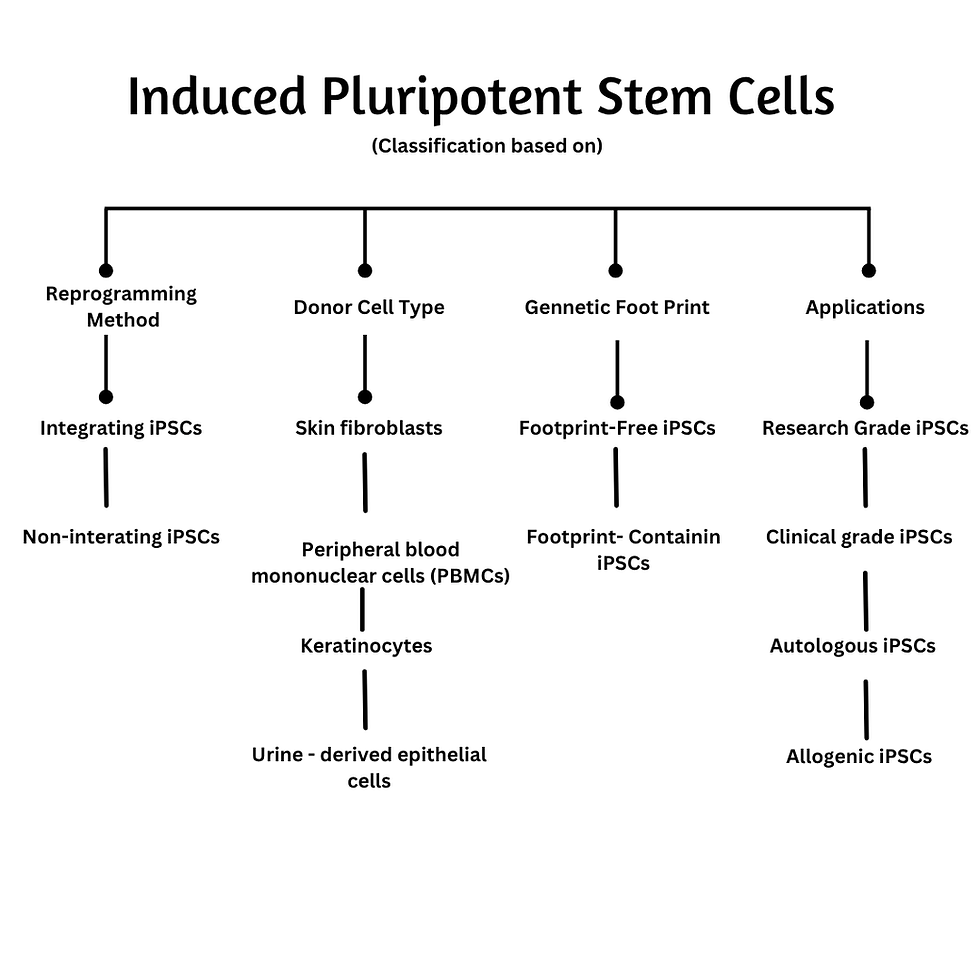
Despite their potential, the use of ESCs is not without controversy. Because they are derived from embryos, their collection raises ethical questions about the beginning of life and the use of human embryonic tissue. Nevertheless, ongoing research continues to explore alternative methods of generating pluripotent stem cells, such as induced pluripotent stem cells (iPSCs), which do not involve embryos.
Applications in Brain Science
In the context of brain science, ESCs offer remarkable promise. Their ability to differentiate into neurons and glial cells makes them invaluable for studying brain development, modeling neurological diseases, and exploring treatments for conditions like Parkinson’s disease, Alzheimer’s disease, and spinal cord injuries.
Conclusion
Embryonic stem cells represent a cornerstone of modern biomedical research. By unlocking the secrets of their biology, scientists are paving the way for groundbreaking discoveries in developmental biology, disease modeling, and regenerative medicine.

Comments